Research

College-in-3 Membership Profile

College-in-3 Exchange:

A National Movement for Affordable, Innovative Degrees

Membership Status as of October 2025

Compiled by Lindsay Addington

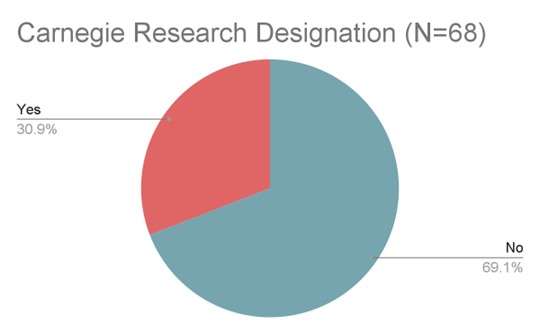
The College-in-3 Exchange is a nonprofit network uniting more than 70 colleges and universities The 2025 Carnegie Classifications list research designations separately from institutional classifications. There are three threshold-based research designations, and College-in-3 institutions meeting any threshold are considered to have a research designation.

that are leading the way in creating high-quality three-year undergraduate degrees. From large public research universities to small private colleges, from community colleges to regional comprehensives, our members reflect the full spectrum of American higher education.

This broad institutional membership is our strength: rural and urban, faith-based and secular, selective and open-access institutions are all working to design programs that reduce costs, accelerate time to degree, and maintain excellent student outcomes. By bringing such a wide range of institutions into a Community of Practice, the Exchange demonstrates higher education’s collective capacity to innovate and respond to urgent calls for affordability, flexibility, and workforce relevance.
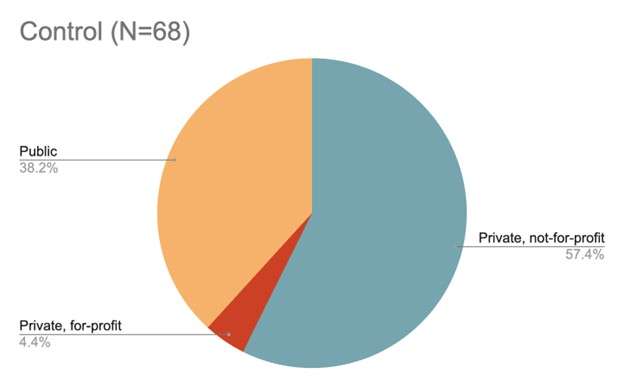
Pie chart titled Control (N=68) showing 57.4% Private not-for-profit, 38.2% Public, and 4.4% Private for-profit. Private not-for-profit is the largest segment, followed by Public, then Private for-profit.
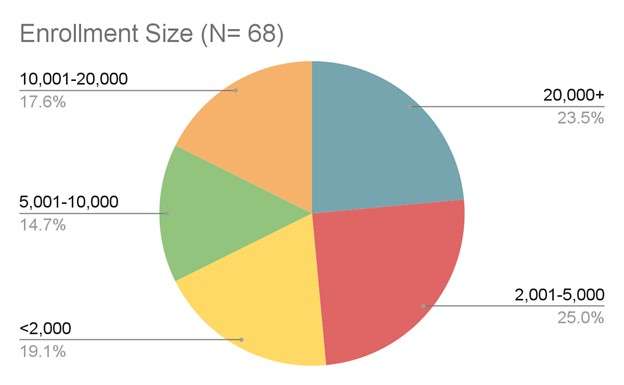
Pie chart showing enrollment size for 68 groups: 23.5% have 20,000+; 25.0% have 2,001–5,000; 19.1% have fewer than 2,000; 14.7% have 5,001–10,000; 17.6% have 10,001–20,000.
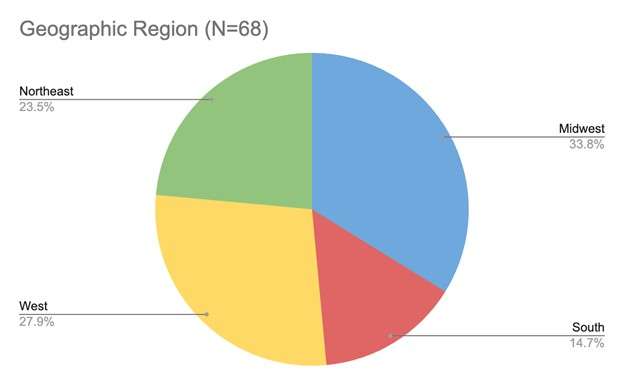
Pie chart showing distribution by geographic region for 68 people: Midwest 33.8%, West 27.9%, Northeast 23.5%, and South 14.7%.
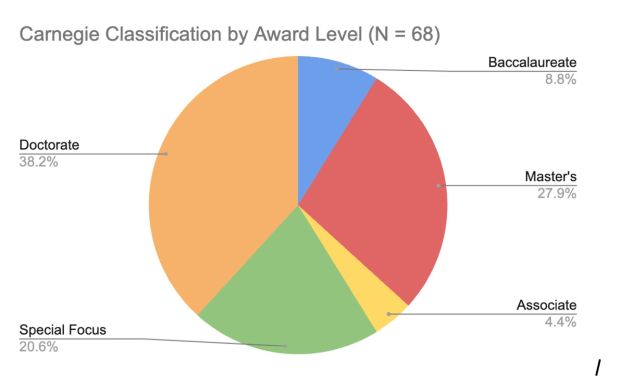
A pie chart titled Carnegie Classification by Award Level (N = 68) shows Doctorate 38.2%, Master’s 27.9%, Special Focus 20.6%, Baccalaureate 8.8%, and Associate 4.4%.
A pie chart titled Carnegie Research Designation (N=68) shows 30.9% answered Yes and 69.1% answered No regarding the designation. The Yes section is smaller than the No section.
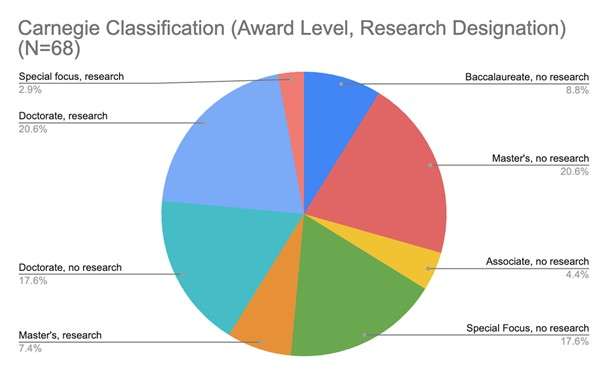
A pie chart showing the Carnegie Classification of 68 institutions by award level and research designation. Categories include doctorate, masters, baccalaureate, associate, and special focus, with or without research.

The geographic regions are defined by the U.S. Census Bureau: https://www2.census.gov/geo/pdfs/maps-data/maps/reference/us_regdiv.pdf  

Data derived from the 2025 Carnegie Classifications. Chart combines Institutional Classifications and research designations.